
Hey there, fellow crypto adventurer. If you’re still holding that bag of Bitcoin from 2021 and wondering why your portfolio feels like it’s been through a blender, buckle up. The Wild West days of crypto in America are officially over—or at least they’ve traded in the tumbleweeds for some shiny new guardrails. As of April 2026, the U.S. has finally rolled out a patchwork of rules that actually make sense (mostly). No more guessing whether the SEC is going to drop a surprise lawsuit on your favorite token like it’s a bad prank.
Think of it this way: crypto used to be that chaotic house party where everyone was doing their own thing. Now it’s the same party, but there’s a bouncer at the door, a clear list of house rules, and a friendly reminder that the IRS is watching your wallet like a hawk. This article breaks it all down in plain English—no lawyer-speak, no endless acronyms (okay, maybe a few, but I’ll explain them). We’ll laugh at the absurd parts, nod at the smart ones, and walk away knowing exactly what you need to do as an investor right now. Let’s dive in.
The Evolution of Crypto Rules: From “Who Cares?” to “Here’s the Playbook”
Remember 2022? Regulators were treating crypto like that weird kid in class who kept breaking things. The FTX collapse was the final straw—Congress and agencies woke up and realized they couldn’t just keep slapping fines and calling it a day. Fast-forward to 2025: President Trump signs the GENIUS Act into law in July, giving stablecoins their first real federal framework. Then, in March 2026, the SEC and CFTC drop a joint interpretation that’s basically the crypto equivalent of a “Here’s How This Actually Works” manual.
It’s not perfect. The big market-structure bill (the CLARITY Act) is still kicking around the Senate like a bad habit, but the pieces are falling into place faster than a bull run after a Bitcoin ETF approval. The vibe shift? From “regulation by enforcement” (aka sue first, ask questions later) to actual upfront guidance. Investors win because uncertainty is the real portfolio killer. One day you’re buying a token thinking it’s a commodity; the next you’re explaining to a judge why it’s not a security. Nobody has time for that drama.
What’s changed in 2026? Clarity on what counts as a security versus a commodity, tighter rules for stablecoins, and broker reporting that makes your tax return feel like a group project with the IRS. If you’re an everyday investor—whether you’re stacking sats on weekends or running a small DeFi position—this stuff matters. It affects where you can trade, what you can earn, and how much Uncle Sam takes when you finally cash out.
Meet the Regulators: Your New Crypto Overlords (And Why They’re Not So Bad)
Let’s keep it simple. There are two main players now sharing the sandbox: the SEC (Securities and Exchange Commission) and the CFTC (Commodity Futures Trading Commission). They used to fight like cats and dogs over jurisdiction. The March 2026 joint guidance basically told them to play nice.
- SEC: Handles anything that looks like a security—think investment contracts where you’re expecting profits from someone else’s efforts (classic Howey test stuff). They’re the ones who used to go after ICOs left and right.
- CFTC: Oversees commodities—most utility tokens, Bitcoin, Ethereum (in many cases), and anything that functions more like digital gold or oil than a stock.
Other agencies in the mix:
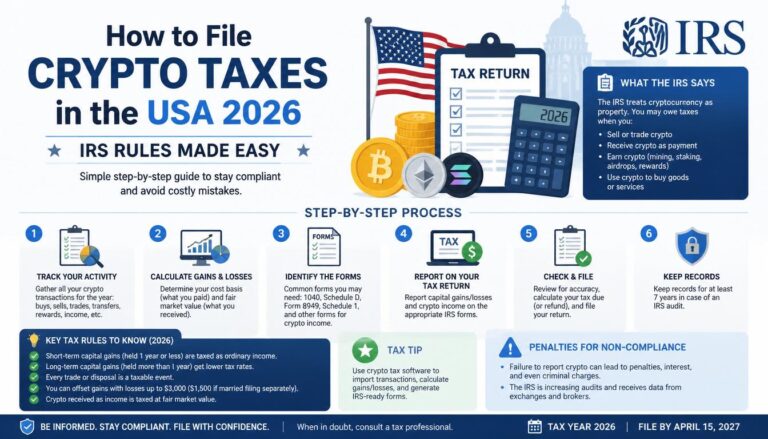
- IRS: Treats crypto as property. Every trade, swap, or even using crypto to buy a coffee is a taxable event. More on this later—spoiler: they got better tools in 2026.
- FinCEN and Treasury: Money laundering and sanctions cops. They care if your wallet is funding anything shady.
- State regulators: California’s Digital Financial Assets Law kicks in July 2026, and New York still loves its BitLicense. If you’re in a big state, you’ve got extra homework.
Humor break: Imagine the SEC as that overly cautious parent who wants to know exactly what your token “does for a living,” while the CFTC is the chill uncle who just wants to make sure it’s not being used to bet on the price of imaginary pigs. Together, they’re trying to make America the “crypto capital of the world” instead of watching talent flee to Singapore or Dubai.
The GENIUS Act: Stablecoins Get a Grown-Up Rulebook
Stablecoins like USDT, USDC, and the new USA₮ (Tether’s regulated version) are the glue holding crypto trading together. Before GENIUS, it was the Wild West—some backed by actual dollars, others… let’s just say “creative accounting.” Signed in July 2025, the GENIUS Act requires:
- 1:1 backing with high-quality liquid assets (cash, Treasuries, etc.).
- Monthly attestations by independent auditors—so no more “trust me, bro” reserves.
- Licensing for issuers—federal or state, with capital and AML rules.
- No interest or yield on plain holding (banks fought hard for this to protect deposits).
Key deadlines hitting in 2026: Regulators must finalize implementing rules by July 18, 2026, with full effect by early 2027. Tether already launched a compliant USA₮ through Anchorage Digital. If you hold stablecoins, double-check the issuer. Non-compliant ones could face restrictions or delistings on U.S. platforms.
Why should you care? Stablecoins are how you park cash between trades without converting back to dollars every five minutes. The new rules make them safer, but they also mean fewer “high-yield” gimmicks. Think of it as trading your sketchy neighborhood ATM for a bank teller who actually counts the money. Safer, but maybe a tad less exciting.
SEC’s March 2026 Guidance: The Token Taxonomy That Changes Everything
This is the big one everyone’s buzzing about. On March 17, 2026, the SEC (with CFTC nodding along) released a 68-page interpretation that classifies crypto assets into five neat buckets. No more guessing games.
Here’s the breakdown in a handy table:
| Category | Examples | Regulated By | Key Notes |
|---|---|---|---|
| Digital Commodities | Bitcoin, many utility tokens | CFTC | Not securities; function like digital gold/oil |
| Digital Collectibles | NFTs (non-investment ones) | Generally none | Pure art/utility, not profit schemes |
| Digital Tools | Protocol tokens for actual use | Generally none | Used for governance or access, not passive profit |
| Payment Stablecoins | Compliant USDC, USA₮ | GENIUS Act / OCC | Backed 1:1; no securities treatment |
| Digital Securities | Tokens sold as investments | SEC | Expect profits from others’ efforts |
Humor alert: It’s like the SEC finally admitted most tokens are more like baseball cards or bus tokens than Apple stock. No more suing every project that breathes funny.
The CLARITY Act: The One That’s Still Cooking
The Digital Asset Market Clarity Act passed the House in 2025 and is inching through the Senate. It would create a full market structure—registration for exchanges, clear broker/dealer rules, and a clean handoff between SEC and CFTC. As of April 2026, it’s stalled a bit over stablecoin yield debates and banking lobby pushback, but bipartisan support is strong. Expect hearings and possible passage later this year or early 2027.
Until then, the March guidance fills the gap. If CLARITY passes, it’ll supercharge institutional adoption—think easier custody, more ETFs, and on-chain everything. Investors: Watch for Senate votes like your portfolio depends on it (because it kinda does).
Crypto Taxes in 2026: The IRS Just Got a Magnifying Glass
Crypto is still property. Sell, swap, or spend it? Taxable capital gain or loss. But 2026 brings upgrades:
- Form 1099-DA: Brokers (exchanges, some wallets) now report your transactions to the IRS starting with 2025 activity filed in 2026. Gross proceeds and cost basis (from Jan 1, 2026 onward).
- No more universal pooling: Each wallet’s basis is tracked separately. Messy if you move coins around.
- DeFi and self-custody still gray: If you trade on a decentralized exchange without a U.S. broker, you self-report—but good luck if the IRS audits.
Pro tip: Use tax software that integrates with your wallets. And remember, even airdrops or staking rewards are income when received. The IRS isn’t joking anymore. It’s like they finally learned how to use blockchain explorers. Funny how that works.
State-Level Shenanigans: California and New York Want In
Don’t sleep on the states. California’s Digital Financial Assets Law goes live July 1, 2026—basically a licensing requirement for anyone serving CA residents. New York’s BitLicense is still around, with stricter security and recovery rules. If your exchange isn’t licensed where you live, you might need to switch platforms. It’s the regulatory equivalent of “you can’t sit with us” unless you have the right paperwork.
What This All Means for You: Practical Investor Advice
Here’s the actionable stuff:
- Portfolio check: Review your holdings against the five categories. If it’s a digital security, expect more disclosure requirements from projects.
- Trading platforms: Stick to compliant U.S. exchanges for easy 1099s and peace of mind. Offshore? You still owe taxes, and the IRS is getting better at tracking.
- Stablecoin strategy: Use GENIUS-compliant ones for safety. Avoid yield promises that sound too good—they might be skirting rules.
- DeFi participation: Staking and liquidity providing are generally fine, but document everything. The “decentralized enough” test matters.
- Tax prep: Start tracking basis now. Tools like CoinLedger or Koinly are your friends.
List of quick dos and don’ts:
Do:
- Keep detailed records of every transaction date, amount, and fair market value.
- Use self-custody wallets responsibly—hardware is your buddy.
- Diversify across categories (commodities for long-term hold, stablecoins for parking cash).
Don’t:
- Ignore airdrops just because “it’s free.” They’re taxable.
- Panic-sell because of headlines. The rules are pro-innovation overall.
- Assume every new token is compliant. DYOR still rules.
Potential Pitfalls and Funny Traps to Avoid
Picture this: You stake your tokens, earn rewards, and forget to report them. The IRS shows up like your mom checking your browser history. Or you wrap a token thinking it’s no big deal—turns out the promoter was hyping it as an investment, and suddenly it’s a security. Oops.
Another classic: Moving coins between wallets without tracking basis properly. Come tax time, it’s like explaining to your accountant why your spreadsheet looks like abstract art. And with California’s new law, ignoring state rules could mean your favorite app ghosts you entirely.
The humor in all this? Regulators finally realized crypto isn’t going away, so they’re building the amusement park instead of burning it down. But the rides still have height requirements (compliance) and ticket costs (taxes).
Looking Ahead: 2027 and the Crypto Golden Age?
If CLARITY passes and GENIUS rules fully kick in, 2027 could be massive—more tokenized real-world assets, easier institutional money, and maybe even a Bitcoin strategic reserve (rumors are swirling). Banks are warming up to crypto custody after the Fed and FDIC eased restrictions. The U.S. is positioning itself as the leader instead of playing catch-up.
Risks remain: Global coordination isn’t perfect, and a black-swan event could bring new rules. But the trajectory is clear—innovation with guardrails.
Wrapping It Up: Time to Get Compliant and Get Excited
Crypto regulations in 2026 aren’t perfect, but they’re a huge step up from the chaos of yesterday. You’ve got clearer lines between securities and commodities, safer stablecoins, and tax reporting that (while annoying) levels the playing field. As an investor, your job is simple: Stay informed, document everything, and keep that sense of humor when the forms pile up.
The market’s maturing, which means bigger opportunities for those who play by the new rules. So dust off your ledger, update your tax software, and maybe crack a smile knowing that crypto’s no longer the rebellious teenager—it’s the young adult finally getting its own apartment (with a lease and everything).
Now go forth, invest wisely, and may your gains be taxed fairly and your airdrops be plentiful. See you on the other side of the next bull run.
About the Author