
Is Crypto Legal in the USA in 2026? Latest Laws Explained Simply
Hey there, fellow crypto curious (or maybe crypto-confused) folks. Picture this: It’s April 2026, your coffee’s getting cold, and you’re staring at your wallet app wondering if the government is secretly plotting to snatch your Bitcoin like it’s the last slice of pizza at a party. Relax. Crypto isn’t illegal in the USA. In fact, it’s more welcome than ever before. But “legal” doesn’t mean “wild west with zero rules.” Think of it like driving a car—perfectly fine as long as you follow the speed limits, have a license, and don’t run red lights while texting your buddy about the latest meme coin.
I’m going to walk you through the whole messy-but-improving picture in plain English. No lawyer-speak, no walls of jargon. We’ll cover the big federal players, the game-changing laws that dropped in 2025 and early 2026, how the taxman gets his cut (spoiler: he always does), what you can actually do with crypto day-to-day, and even how things differ from one state to the next. Along the way I’ll throw in a few laughs because, let’s face it, watching regulators try to keep up with blockchain is like watching your grandparents learn TikTok—equal parts adorable and chaotic. By the end you’ll know exactly where you stand without needing a law degree or a stiff drink. Let’s dive in.
The Big Question: Is Crypto Actually Legal?
Yes. Full stop. You can buy it, sell it, hold it, trade it, stake it, and even use it for payments in most places. The U.S. government has never banned cryptocurrency outright, and 2026 is no different. What changed big-time is the attitude. A couple years back it felt like the SEC was playing whack-a-mole with every project that moved. Now? Regulators are handing out rulebooks instead of subpoenas. As of right now in 2026, crypto is treated like any other asset—legal, but watched closely so nobody gets scammed or laundered money through it.
Think of crypto the way you think about stocks or gold. Nobody’s banning gold bars, but you still have to report when you sell them and pay taxes. Same deal here. The only real no-go zones are things like using crypto for illegal stuff (duh) or trying to pretend your random meme token is a “utility” when it’s really just a get-rich-quick scheme. The feds have drawn clearer lines, and most everyday folks operating honestly are just fine.
Who’s Running the Show? Federal Agencies Explained Like You’re Five (But Smarter)
The U.S. doesn’t have one single “Crypto Czar.” Instead, a handful of agencies split the duties like kids arguing over chores. Here’s the simple breakdown:
- SEC (Securities and Exchange Commission): They watch anything that looks like a stock or investment contract. If a token promises profits based on someone else’s hard work (classic Howey test), it’s probably under SEC rules. But here’s the 2026 update that made everyone breathe easier: Most big coins like Bitcoin and Ethereum are NOT securities anymore, according to their March 17, 2026 interpretation. Huge win.
- CFTC (Commodity Futures Trading Commission): They handle commodities—think oil, wheat, or, yep, Bitcoin and Ether. In 2026 they’re getting more power over spot trading thanks to ongoing market structure talks. Their new chair is all about innovation, so perpetual futures and tokenized collateral are suddenly on the menu.
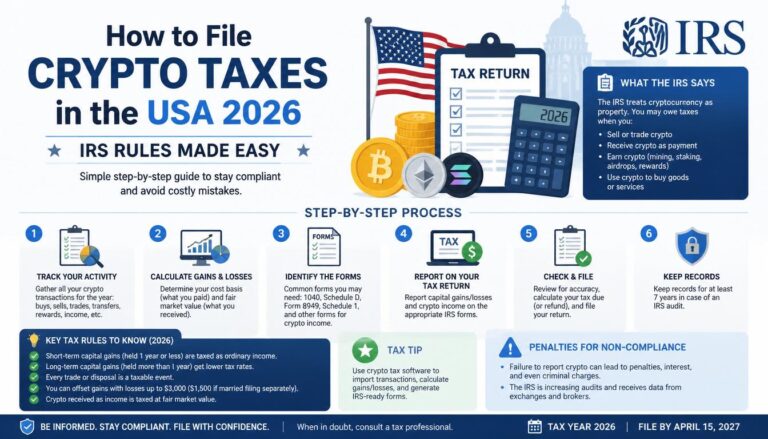
- IRS: The party pooper who shows up with a calculator. Crypto is “property,” just like your house or baseball card collection. Every sale, trade, or even using it to buy a sandwich can trigger taxes. More on that nightmare later.
- FinCEN and Banking Regulators: They care about money laundering and making sure banks don’t freak out when you move crypto. The big shift? Banks can now custody crypto and hold stablecoin reserves without getting slapped.
- OCC and FDIC: These guys oversee banks and stablecoins under the new GENIUS Act. Basically, they make sure your USDC isn’t backed by IOUs from your cousin’s garage.
The agencies are finally talking to each other instead of fighting turf wars. Their March 2026 joint guidance even created a handy “token taxonomy” so everyone knows what bucket their favorite coin lands in. It’s like they finally got a group chat and started coordinating.
The 2025-2026 Laws That Changed Everything (No, Really)
2025 was the year crypto went from “tolerated rebel” to “somewhat respected family member.” Two big laws and one major interpretation flipped the script.
First up: the GENIUS Act, signed by President Trump in July 2025. This bad boy created the first real federal rules for stablecoins. Every dollar of stablecoin has to be backed 1:1 by actual dollars or super-safe assets. Issuers need licenses, regular audits, and AML checks. No more Wild West stablecoins printed on a whim. Result? Banks jumped in, Tether launched a U.S.-compliant version, and everyday folks can trust their USDC a lot more. Funny side note: stablecoins went from “maybe a scam” to “the boring, reliable uncle who shows up on time with cash.”
Then there’s the CLARITY Act (Digital Asset Market Clarity Act). It passed the House in 2025 and is still grinding through the Senate in 2026. Once it lands (and most people think it will), it’ll clearly split jobs: CFTC gets digital commodities like BTC and ETH for spot markets, SEC keeps the securities stuff. Decentralized finance gets some breathing room too. Until then, the March 2026 SEC/CFTC interpretation is already doing a ton of heavy lifting.
That interpretation is gold. It spells out that airdrops, protocol mining, staking rewards, and wrapping tokens are often NOT securities if the asset itself isn’t one. It also created five neat categories:
- Digital commodities (BTC, ETH)
- Digital collectibles (NFTs that are just art)
- Digital tools (utility tokens that actually do something)
- Stablecoins (payment tokens)
- Digital securities (the ones that still act like stocks)
Suddenly projects know the rules before they launch instead of guessing and hoping the SEC doesn’t sue them later. It’s like the referee finally explained the game instead of just handing out yellow cards.
Taxes: The Part Where the IRS Ruins the Party
Ah, taxes. The one thing more certain than crypto volatility. The IRS still calls crypto “property,” so every time you sell, trade, or spend it you might owe capital gains tax. Short-term (held less than a year) gets taxed like regular income—anywhere from 10% to 37% depending on your bracket. Long-term (over a year) is kinder: 0%, 15%, or 20% for most folks.
Here’s a quick table to make your eyes happy instead of glazing over:
| Holding Period | Tax Rate Type | Example Rate for $80k Earner |
|---|---|---|
| Less than 1 year | Ordinary income | 22% |
| More than 1 year | Long-term capital gains | 15% |
Don’t forget about mining or staking income—that counts as regular income the moment you receive it. And yes, even swapping one crypto for another is a taxable event. The government basically treats your wallet like a very expensive lemonade stand.
Buying, Selling, and Everyday Crypto Life in 2026
Good news: It’s easier than ever. Licensed exchanges are everywhere, KYC is still required (sorry, privacy maximalists), but once you’re verified you can buy with dollars in seconds. Spot Bitcoin and Ether ETFs are old news and super popular. Banks are offering crypto custody services without treating it like toxic waste.
Want to spend it? Some merchants take crypto directly, and stablecoins make it feel almost like using Venmo. Just remember: spending crypto triggers taxes too, so track that cost basis or the IRS will assume you paid zero and tax the whole amount. Ouch.
Crypto Mining: Still Legal, But With a Few Caveats
Mining is totally allowed. You can fire up your rigs or join a pool and earn rewards legally. Just pay taxes on those rewards as income, and watch your electricity bill—some states give tax breaks or cheap power to miners, others treat it like a noisy neighbor. The environmental crowd still grumbles, but the pro-innovation vibe means nobody’s shutting down legitimate operations.
DeFi, NFTs, and the “Fun” Stuff
Decentralized finance isn’t banned, but platforms that act like banks or exchanges often need to register now. The new rules give decentralized projects clearer paths if they stay truly decentralized. NFTs? Still legal for art, collectibles, and even real-world asset tokenization. Just don’t promise buyers they’ll get rich from your cartoon ape—SEC might still call that a security.
Humor break: Remember when DeFi was “unstoppable code”? Now it’s “unstoppable code… that files taxes and registers with the CFTC.” Progress, I guess.
State-by-State: The U.S. Isn’t One Big Happy Crypto Family
Federal rules set the floor, but states add their own sprinkles. Here’s a quick comparison table of some standouts:
| State | Vibe | Key Rules/Notes | Funny Nickname |
|---|---|---|---|
| Wyoming | Super friendly | DAO laws, no state income tax, crypto banks | Crypto Cowboy Capital |
| New York | Strict but established | BitLicense required for many businesses | The Permission Slip State |
| California | Getting serious | Digital Financial Assets Law kicks in July 2026 | The “We’ll License You” State |
| Texas | Miner heaven | Cheap power, pro-business | The Hashrate Hotspot |
| Florida | Pretty chill | No state income tax, growing hub | Miami Vice 2.0 |
Risks, Scams, and How Not to Lose Your Shirt
Legal doesn’t mean safe. Scams are still everywhere—rug pulls, fake exchanges, phishing texts that look like they came from your bank. The new rules help by forcing real platforms to follow AML/KYC, but decentralized stuff can still be sketchy. My advice? If it sounds too good to be true, it probably is. And never invest money you can’t afford to watch evaporate like morning dew on a hot Texas mining rig.
Also watch for unclaimed property laws. Some states can seize “inactive” crypto after a few years. Log in once in a while so your exchange doesn’t hand your coins over to the state like a bad ex returning your stuff.
What’s Coming Next? The Crystal Ball for Late 2026 and Beyond
CLARITY Act final passage would be massive. More banks offering crypto services, tokenized real estate, maybe even everyday payments becoming normal. The U.S. is openly trying to become the “crypto capital of the world.” Regulators are friendlier, innovation is encouraged, but they’re still cracking down hard on fraud.
Will prices moon? Who knows—that’s the fun (and terrifying) part. But the legal foundation is solid now, which means real businesses and regular people can play without looking over their shoulder every five seconds.
Wrapping It Up: Crypto Is Here to Stay
So, is crypto legal in the USA in 2026? Absolutely. Is it simple? Not really—but it’s clearer than it’s ever been. The wild regulatory rollercoaster of the last decade finally pulled into the station, and the new rules are designed to protect folks while letting innovation breathe. Sure, you still have to pay taxes, follow KYC on exchanges, and avoid obvious scams. But you can hold your coins, stake them, trade them, and even use stablecoins for real stuff without fearing a midnight raid.
If you’re just starting out, open a reputable exchange account, start small, track everything for taxes, and maybe laugh at the memes while you learn. The space has grown up a bit, but it’s still got that rebellious spark that made it exciting in the first place. Just remember: the government finally stopped treating crypto like a suspicious package on your porch and started treating it like a legitimate (if slightly eccentric) part of the economy.
Now go forth, stay legal, and maybe treat yourself to a coffee with those gains—after you pay the IRS, of course. They’ve earned it… sort of.
About the Author