Hey there, fellow small business owner. If you’re reading this while sipping coffee at your kitchen table, wondering how to squeeze more customers out of a tight budget in 2026, you’re not alone. Running a shop, service, or online side hustle in the USA right now feels like trying to juggle flaming torches while riding a unicycle—especially with AI popping up everywhere like that one friend who shows up uninvited to every party. But here’s the good news: you don’t need a fancy agency or a six-figure ad spend to win. The best digital marketing strategies this year are still built on smart basics, just with a fresh coat of 2026 tech paint.
In this article, we’re keeping it real—no jargon overload, no “revolutionary AI breakthroughs” that sound like sci-fi. Just practical, battle-tested ideas that actually work for folks like you and me. We’ll cover everything from social media that doesn’t suck your time dry to SEO that keeps paying off long after the hype dies. Expect some laughs, a few eye-rolls at common mistakes, and plenty of “wait, I can actually do that?” moments. By the end, you’ll have a game plan that fits your wallet and your sanity. Let’s dive in.
Why Digital Marketing Matters More Than Ever for US Small Businesses in 2026
Picture this: Your local competitor down the street just posted a quick TikTok video of their team goofing around, and suddenly their phone won’t stop ringing. That’s not luck—it’s digital marketing done right in 2026. With more Americans shopping, searching, and scrolling on their phones than ever, skipping the online game is like closing your doors on a Saturday. Small businesses make up over 99% of all US companies, but only the smart ones are grabbing the lion’s share of new customers online.
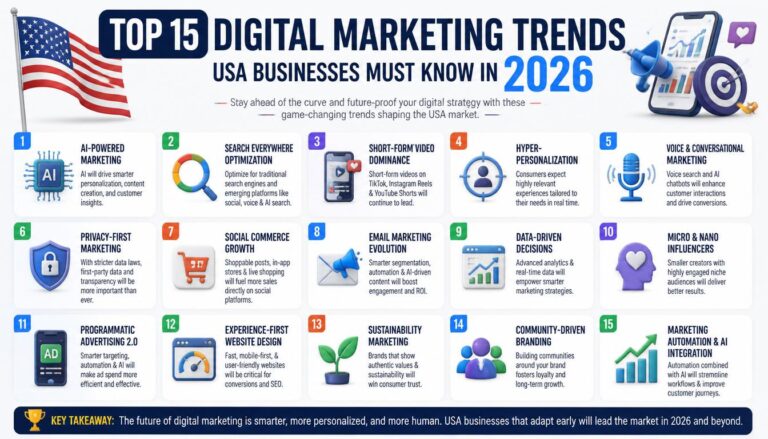
What’s changed this year? AI is everywhere, sure, but it’s not replacing you—it’s making the boring stuff faster so you can focus on what humans do best: building trust. Privacy rules are stricter (goodbye, creepy third-party cookies), so first-party data from your own customers is king. Short videos rule attention spans, and people crave authenticity over polished ads. Plus, local search is exploding—folks in Seattle or Miami want “near me” results that actually show up.
The payoff? Businesses using solid digital strategies see 2-3 times more leads than those who don’t, according to recent industry reports. But here’s the funny part: most small owners still treat marketing like a New Year’s resolution—lots of enthusiasm in January, then crickets by March. Don’t be that guy. Start simple, stay consistent, and watch your ROI climb. Now, let’s break down the strategies that actually move the needle.
Getting Started: Nail Your Goals and Audience Before You Spend a Dime
Before you touch a single ad or post, grab a notebook (or your phone notes app—whatever works). Ask yourself: What do I want? More foot traffic to my brick-and-mortar store in Austin? Online sales for my handmade jewelry in New York? Or repeat customers who rave about my plumbing service in Chicago?
In 2026, vague goals like “get more customers” are as useful as a screen door on a submarine. Be specific: “Get 50 new email sign-ups this quarter from local moms aged 25-40 who love eco-friendly products.” Why? Because once you know your audience, everything else clicks.
Use free tools like Google Analytics or even Facebook’s audience insights to spy on what your ideal customers are into. Pro tip: Talk to your current customers. Ask them why they chose you over the big-box store. Their answers are gold. One bakery owner I know discovered her fans loved her “grandma’s secret recipe” stories—so she leaned into that on Instagram and doubled her weekend sales.
Humor break: Trying to market to everyone is like bringing potato salad to a vegan potluck. Nobody’s happy, and you look clueless. Narrow it down, and you’ll stop wasting time on the wrong crowd.
Social Media Marketing: Build Real Connections Without Burning Out
Social media isn’t dead—it’s just smarter in 2026. Over 66% of small businesses rely on unpaid posts, and another 56% dabble in ads, per recent surveys. The key? Pick 2-3 platforms where your people actually hang out and master them instead of spreading yourself thinner than cheap peanut butter.
For most US small businesses, Facebook and Instagram still dominate for local reach. TikTok is exploding for younger crowds or fun products (think food trucks or pet groomers). LinkedIn works wonders if you’re B2B, like a freelance accountant targeting other small owners.
Here’s a quick list of do’s and don’ts:
- Do post consistently—3-5 times a week max. Quality beats quantity.
- Don’t chase every trend. That viral dance challenge might get likes, but it won’t sell your accounting software.
- Do mix in stories, reels, and live sessions. People love seeing the human behind the brand.
- Don’t sound like a robot. Write captions like you’re chatting with a friend: “Our new lavender soap is so good, even my grumpy neighbor smiled. Who else needs a self-care win this week?”
Humor alert: Posting the same boring promo every day is like yelling “buy my stuff!” at a family dinner. Awkward and ineffective. Instead, show behind-the-scenes: your team testing new flavors or fixing a leaky pipe on camera. Authenticity wins trust, and trust wins sales.
For paid social ads, start small—$5-10 a day on Facebook Ads Manager. Target locally with lookalike audiences based on your best customers. One coffee shop in Denver ran a simple “buy one, get one free” ad to a 5-mile radius and saw a 300% ROI in the first week. Not bad for a latte budget.
SEO: Your Long-Term Free Traffic Machine
SEO isn’t flashy, but it’s the gift that keeps giving. In 2026, with AI search tools like Google’s updates and voice assistants everywhere, showing up at the top of results is non-negotiable. Think about it: When someone Googles “best plumber near me in Phoenix,” do you want to be #1 or buried on page 3 where dreams go to die?
Local SEO is huge for US small businesses. Claim and optimize your Google Business Profile—fill out every section, add photos, respond to every review (even the grumpy ones). Encourage happy customers to leave stars; those 4.8 ratings can make or break foot traffic.
Basic SEO steps that won’t cost you a fortune:
- Use free tools like Google Search Console to see what people search for.
- Write blog posts or service pages with keywords like “organic coffee beans Portland” (but make them readable—nobody wants keyword salad).
- Build backlinks by partnering with local bloggers or chambers of commerce.
- Optimize for voice search: Answer questions like “How do I fix a leaky faucet?” in your content.
Table: SEO Quick Wins vs. Common Mistakes
| Strategy | Why It Works in 2026 | Funny Mistake to Avoid | Expected Timeline |
|---|---|---|---|
| Local Google Profile | Shows up in maps and “near me” searches | Ignoring bad reviews like they’re bad exes | 1-3 months |
| Helpful blog content | Builds trust and ranks higher | Stuffing keywords like a Thanksgiving turkey | 3-6 months |
| Mobile-friendly site | 60%+ of searches are on phones | Tiny text that makes readers squint | Immediate |
Content Marketing: Stories That Sell Without Feeling Salesy
Content marketing in 2026 is all about value first, pitch second. Your audience is drowning in noise, so give them something useful—a quick tip video on “5 ways to save on home repairs” if you’re a handyman, or a recipe using your farm-fresh veggies.
Short-form video is exploding. Aim for 15-60 second clips on Instagram Reels or TikTok. Film on your phone—no fancy equipment needed. One boutique owner in California shared “outfit of the day” videos using real customers and saw a 40% bump in store visits.
Mix it up with email newsletters, podcasts, or simple how-to guides. The goal? Position yourself as the helpful expert, not the desperate seller. People buy from folks they like and trust. And yes, AI tools like ChatGPT can draft your first version, but always tweak it to sound like you—not a robot trying too hard at small talk.
Email Marketing: The Underrated Cash Machine
Email might feel old-school, but it’s got the highest ROI of any digital channel—often $36 for every $1 spent. Why? You own the list. No algorithm can take it away like they can on social media.
In 2026, AI makes personalization easy. Tools like Mailchimp or Klaviyo let you segment lists: “Hey, loyal coffee drinkers—here’s 10% off your favorite blend.” Send welcome series, abandoned cart reminders, and monthly tips.
List of email wins:
- Build your list with a simple pop-up offering a free guide or discount.
- Keep subject lines fun: “Your Tuesday caffeine fix is here (and it’s on sale).”
- Test send times—mornings work for B2B, evenings for retail.
- Clean your list regularly; nobody likes spam from “that one company.”
Humor time: Sending generic blasts to everyone is like inviting your entire extended family to dinner and serving the same meal to the gluten-free aunt and the carnivore uncle. Disaster. Personalize or perish.
PPC and Paid Ads: Fast Results When You Need Them Now
Sometimes you need customers yesterday. That’s where pay-per-click (PPC) shines—Google Ads, Facebook, or even Amazon for e-commerce. Set a daily budget of $20-50 to start, target locally, and watch the leads roll in.
Focus on Performance Max campaigns on Google—they use AI to place ads across search, YouTube, and maps automatically. Track everything: cost per click, conversion rate, and ROI. One auto repair shop in Texas ran targeted “brake repair near me” ads and filled their schedule for weeks.
Pro tip: Combine with retargeting—show ads to people who visited your site but didn’t buy. It’s like gently reminding your forgetful friend about that lunch date.
AI Tools: Your New Sidekick (Not Your Boss)
By the end of 2026, over 80% of small businesses will use AI for marketing. It’s not scary—it’s practical. Use it for drafting social posts, analyzing customer data, or even creating images with free tools like Canva’s Magic Studio.
But don’t go full robot. AI excels at speed; you bring the heart. Chatbots on your website can answer FAQs 24/7, freeing you up for real conversations. Just test everything—AI hallucinations happen, and a weirdly off-brand post could go viral for the wrong reasons.
Video Marketing: Grab Attention in Seconds
Video will make up over 80% of internet traffic this year. Short, authentic clips win. Film customer testimonials, quick tips, or day-in-the-life stuff. Add captions—most people watch without sound.
Local SEO and Reviews: The Neighborhood Hero Play
Google Business Profile plus glowing reviews = free local dominance. Respond to every review within 24 hours. Bad one? Turn it into a win by fixing the issue publicly.
Analytics: Measure What Matters (and Ignore the Vanity Metrics)
Google Analytics 4 is free and powerful. Track conversions, not just likes. Set up goals like “form submissions” or “store locator clicks.”
Sample budget table for a $500/month small biz:
| Channel | Monthly Spend | Expected Focus | Why It Fits Small Biz |
|---|---|---|---|
| Social (organic + ads) | $200 | Engagement & quick sales | Low cost, high reach |
| SEO/Content | $100 | Long-term traffic | Builds over time |
| $50 | Retention & repeats | Cheap and effective | |
| PPC | $150 | Immediate leads | Controllable budget |
Common Pitfalls That’ll Make You Laugh (or Cry)
Chasing every shiny new platform? You’ll burn out faster than a cheap phone battery. Ignoring mobile optimization? Your site looks like a ransom note on phones. Forgetting to track ROI? That’s like grocery shopping without a list—random and expensive.
Wrapping It Up: Start Small, Stay Consistent, Laugh Along the Way
There you have it—the best digital marketing strategies for small businesses in the USA in 2026. It’s not about doing everything; it’s about doing a few things really well. Pick one strategy from this article today, test it for 30 days, and adjust. Your future self (and your bank account) will thank you.
Remember, even the biggest brands started small. You’ve got the hustle, the heart, and now the know-how. Go make some noise—authentically, of course. And if it all feels overwhelming, just laugh: Marketing is supposed to be fun, not another item on your endless to-do list. Here’s to your best year yet. Now get out there and grow that business!
About the Author